

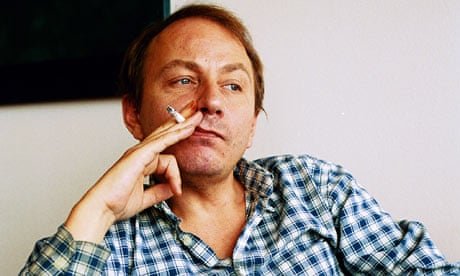
Hey there! Ever heard of Michel Houellebecq? If not, you’re in for a treat. Houellebecq is one of those names that sparks curiosity and debate, especially if you’re into French literature. Known for his provocative writing, he’s crafted a niche that blends satire with social criticism. You’ll find him weaving tales that peel back the layers of modern society and explore the intricacies of human sexuality. Let’s say, if you’re looking to dive into deep, sometimes controversial waters, he’s your guy. Let’s get to know him a bit better, shall we?
Early Years and Education
Born on the far-off island of Réunion, Houellebecq had anything but a conventional start. Imagine being left to fend for yourself as a kid! Yep, that’s exactly what happened to him when his parents took off. After that, little Michel found himself in Algeria before finally touching down in France. He was raised by his grandparents, and it was during this time that he picked up “Houellebecq”—his grandmother’s last name—as his own and forever etched it into the literary world.
But here’s the kicker—despite a rocky beginning, he was sharp as a tack. He went through boarding school and eventually made his way to the Institut National Agronomique Paris-Grignon, snagging a degree in agronomy. However, let’s just say his heart was elsewhere, more attuned to the rhythm of literature than the confines of agrarian studies.
Career Beginnings
Picture this: Houellebecq as a computer programmer! It’s hard to imagine him tucked away behind a computer screen, isn’t it? But that’s where his professional life kicked off. While working a desk job, he quietly nurtured his true passion—writing. His poems found their way into La Nouvelle Revue, marking the start of a remarkable journey.
In ’91, he crushed it with a biographical essay on H.P. Lovecraft. This wasn’t just any essay—it was a bold manifesto arguing against the world and against life itself, which summed up Lovecraft’s ethos. It was like setting the stage before the main act, setting the tone for the kinds of themes Houellebecq would later explore. Meanwhile, his poetry collections like La poursuite du bonheur and Le Sens du combat were gently nudging him into the literary spotlight.
Breakthrough in Literature
Fast-forward to 1994, and Houellebecq released his debut novel, Extension du domaine de la lutte, or for you and me, Whatever. The novel was a provocative buffet, serving up a blend of social critique and existential musings, mirroring Houellebecq’s own tussles with life behind a computer screen. Readers latched onto it, drawn by its raw honesty—and just like that, Houellebecq began turning heads.
It wasn’t just a book; it was a reflection of a life lived at the fringes of society, layered with loneliness and frustration. Through the protagonist, who navigates a drab world of technology and isolation, Houellebecq was making a bold statement about what society had become. It laid the groundwork for the sharper, more pointed narratives that defined his rise in literature.
Rise to Fame
And then, just when you thought he couldn’t top himself, he did. Les Particules élémentaires, or The Elementary Particles, exploded onto the scene in 1998. This book was different; it was fiery, blending science fiction with biting social commentary in a way that coalesced brilliantly. Imagine a narrative so diverse that it skips between explicit sexuality and theories of human evolution, all while unapologetically diagnosing the malaise of Western society.
Winning the Prix Novembre was just the icing on the cake! Houellebecq now found himself celebrated across the globe. His writing was polarizing, its forthrightness clashing with critics but enthralling readers. You couldn’t ignore him; Houellebecq was firmly planted in the literary consciousness, mobilizing his narratives to challenge anything resembling convention.
Notable Works and Achievements
Let’s take a moment to appreciate Houellebecq’s literary journey post-The Elementary Particles. Each of his works seemed to embrace a fresh obsession. La Possibilité d’une île delved into concepts of identity and evolution. It was almost like he was anticipating the issues of the digital age before they became mainstream concerns.
La Carte et le Territoire earned him the prestigious Goncourt Prize, cementing his status as a heavyweight in the literary arena. And talk about timing! Soumission hit the shelves on the exact day of the Charlie Hebdo attack, thrusting his narrative into the limelight amid a swarm of controversy.
Want to know what he’s up to these days? Well, do yourself a favor and check out Anéantir, his latest offering. It’s like he’s holding up a mirror to society, challenging us to confront the chaos of our age.
Michel Houellebecq’s Style and Influence
Now, if you’re wondering why Houellebecq gets tagged as the “bad boy” of French literature, it’s because he doesn’t shy away from pushing buttons. His style? It’s a compelling cocktail of prophecy and provocation. Imagine stories drenched in seemingly offensive, yet alarmingly insightful, observations. That’s the Houellebecq signature.
He’s not just penning words; he’s dabbling in other ventures too. Why stick to books when you can act, direct films, and even take a crack at singing? The man is unstoppable! Like a modern-day Renaissance individual, Houellebecq’s projects stretch beyond the written word.
Conclusion
So, what’s Houellebecq’s ultimate legacy? Love him or hate him, you can’t deny the seismic waves he’s sent rippling through the literary world. From railing against societal norms to delving into the minutiae of existence, Houellebecq brings a layer of complexity that demands contemplation. He’s left an indelible mark, not just within the halls of literature but across arts and culture too.
Curious to learn more? Or maybe you’re feeling inspired to take your creative passions to the next level? Head over to Candidly Business for insights to fuel your journey. The world’s your oyster, just like it was (and still is) for Houellebecq. Dive in and explore!
Also Read:
